Fujita Scale
When people hear a tornado described as an “EF-4” or “EF-5,” they’re hearing a rating based on the Enhanced Fujita Scale, a system used to estimate tornado intensity by examining the damage left behind.
The original Fujita Scale was developed in 1971 by renowned meteorologist Dr. Tetsuya Theodore Fujita, often referred to simply as “Ted Fujita.” Dr. Fujita was a pioneering severe storms researcher at the University of Chicago who became famous for his groundbreaking work on tornadoes, downbursts, and storm damage analysis. He created the Fujita Scale, or “F-Scale,” as a way to connect the observed damage from a tornado to estimated wind speeds, since scientists had very few direct wind measurements inside tornadoes at the time. The original scale ranged from F0 to F5, with stronger tornadoes producing increasingly catastrophic damage.
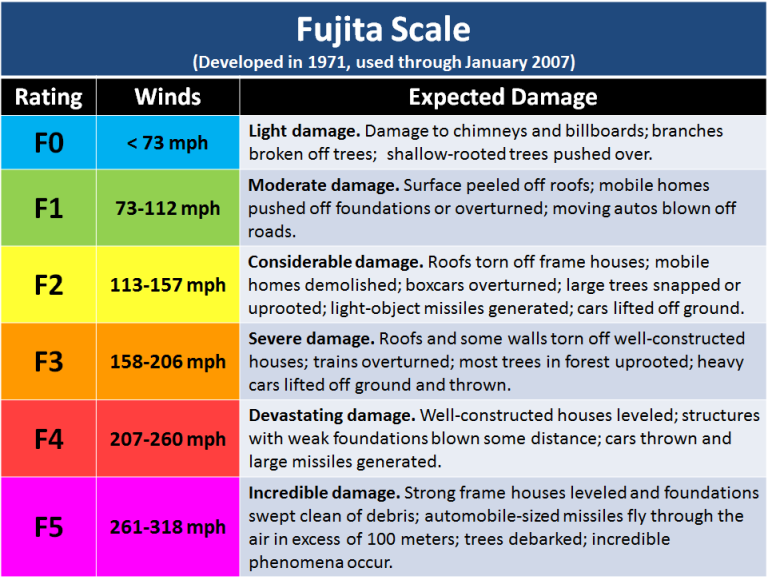
F Scale – Fujita Scale
The Development of the Enhanced Fujita Scale
Over time, meteorologists realized the original Fujita Scale had some limitations. While it revolutionized tornado science, the estimated wind speeds associated with the higher-end ratings were often considered unrealistically high. In response, experts from the National Weather Service, engineers, and meteorologists worked together to develop the Enhanced Fujita Scale, which officially replaced the original Fujita Scale in the United States on February 1, 2007. The updated scale retained the familiar EF0 to EF5 categories but improved how tornado ratings were assigned by incorporating modern engineering research and more detailed damage indicators.
The Enhanced Fujita Scale provides a more accurate relationship between tornado damage and estimated wind speeds. Instead of relying on generalized descriptions of destruction, the EF Scale examines dozens of specific structures and vegetation types, such as homes, schools, transmission towers, and hardwood trees, to better estimate the winds required to cause certain levels of damage. This improved consistency has helped meteorologists and engineers better understand tornado strength, building performance, and storm safety. While the names and categories may look similar, the Enhanced Fujita Scale represents a major advancement in how tornado intensity is assessed in the modern era.
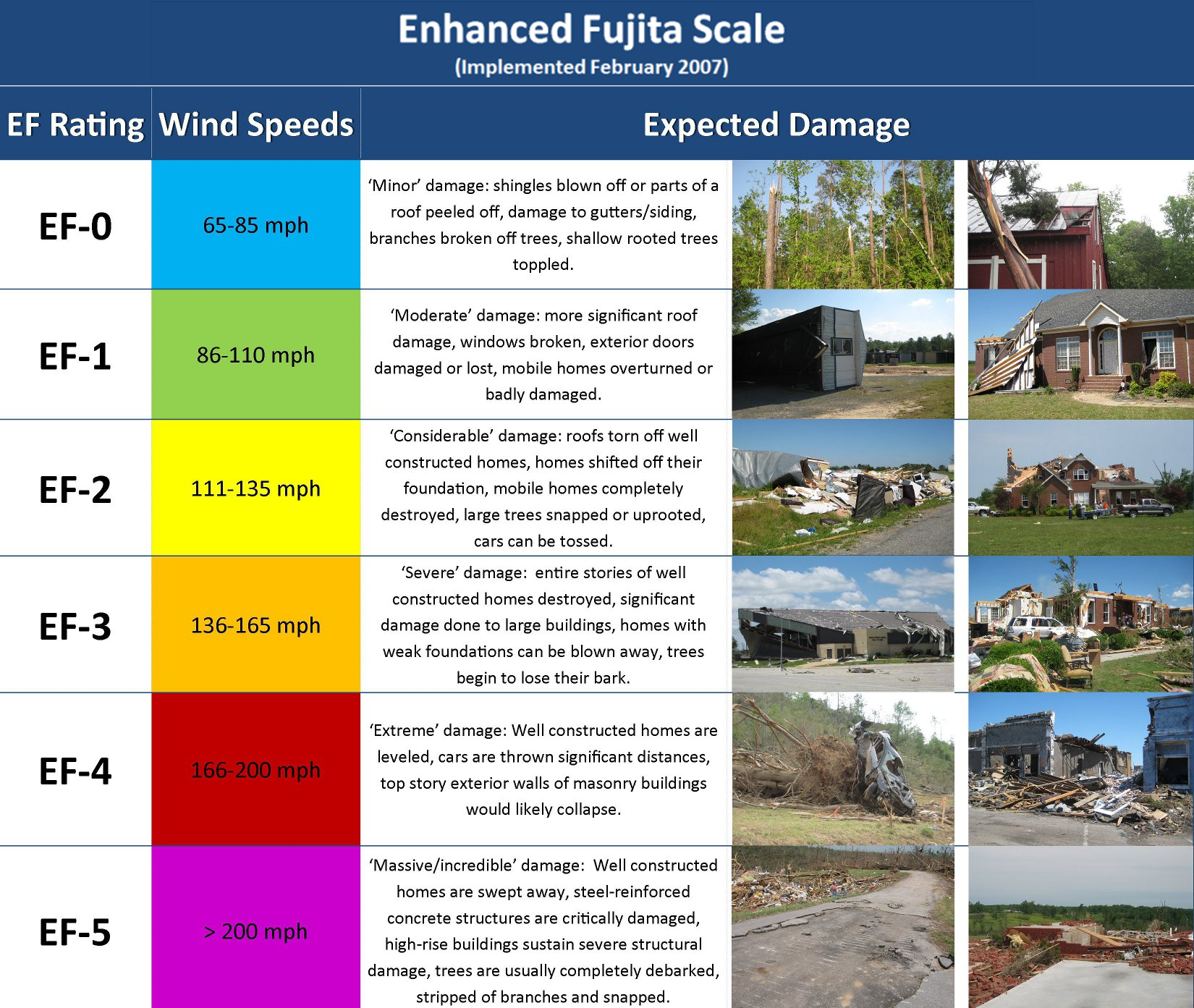
EF Scale – Enhanced Fujita Scale
Limitations of the EF Scale?
The devastating and deadly 2013 El Reno tornado remains one of the most unusual and controversial tornadoes ever rated. The massive tornado struck central Oklahoma on May 31, 2013, and became infamous not only for its extreme size, reaching a record width of about 2.6 miles, but also for the incredible wind speeds detected within the storm. Initially, the tornado was rated EF3 by the National Weather Service because the tornado moved through largely rural areas where there were relatively few well-built structures available to evaluate using the Enhanced Fujita Scale’s damage indicators. Since the EF Scale is based primarily on observed damage rather than direct wind measurements, the lack of substantial structures complicated the rating process.
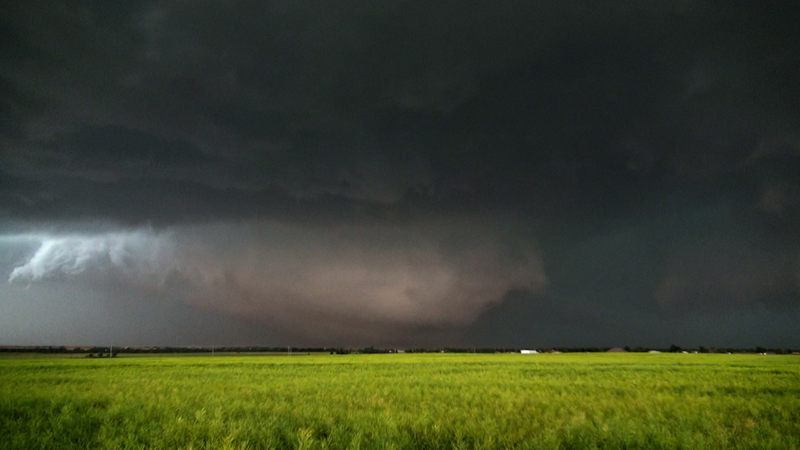
El Reno Tornado – May 31st, 2013
El Reno Tornado Upgraded to and EF5
However, researchers later examined mobile radar data collected by the Doppler on Wheels (DOW) research vehicles and found astonishing wind speeds estimated at around 296 mph within the tornado — among the strongest winds ever measured on Earth. After further review and discussion involving radar data and damage analysis, the tornado’s rating was ultimately upgraded to EF5. The El Reno tornado highlighted one of the major challenges of the Enhanced Fujita Scale: a tornado’s official rating can sometimes depend heavily on what it hits rather than the strongest winds actually occurring within the storm. The event continues to be widely discussed in the meteorological community because it demonstrated both the strengths and limitations of damage-based tornado ratings.
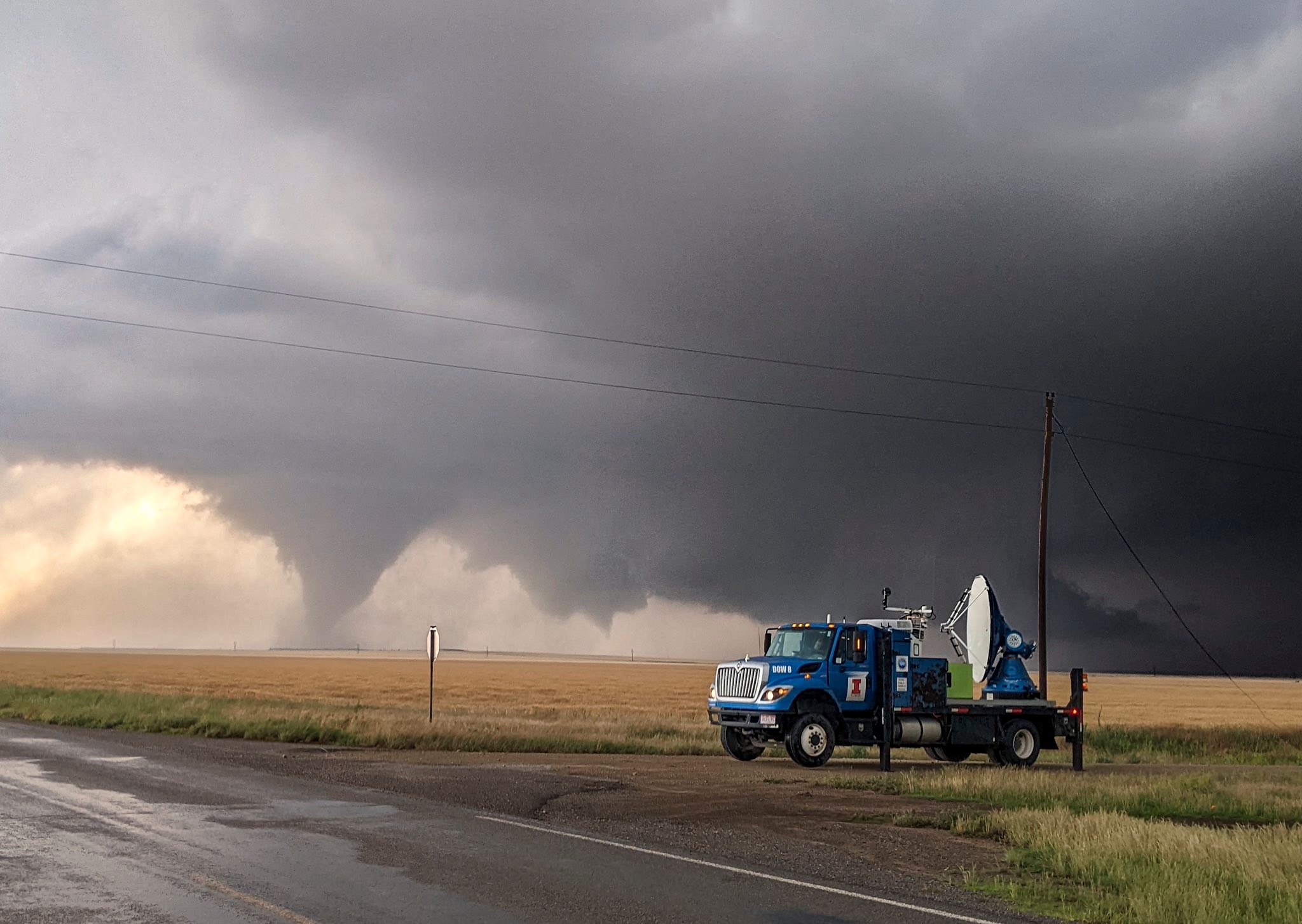
DOW – Doppler on Wheels
Remembering The El Reno Tornado – May 31st, 2013
The tornado injured more than 150 people, with 8 fatalities, including a tragic loss for the storm chasing and research community. The El Reno tornado claimed the lives of legendary storm researcher Tim Samaras, his son Paul Samaras, and fellow chaser Carl Young while conducting research on the storm. Their deaths served as a sobering reminder of how unpredictable and dangerous tornadoes can become — even for some of the world’s most experienced storm researchers and chasers.
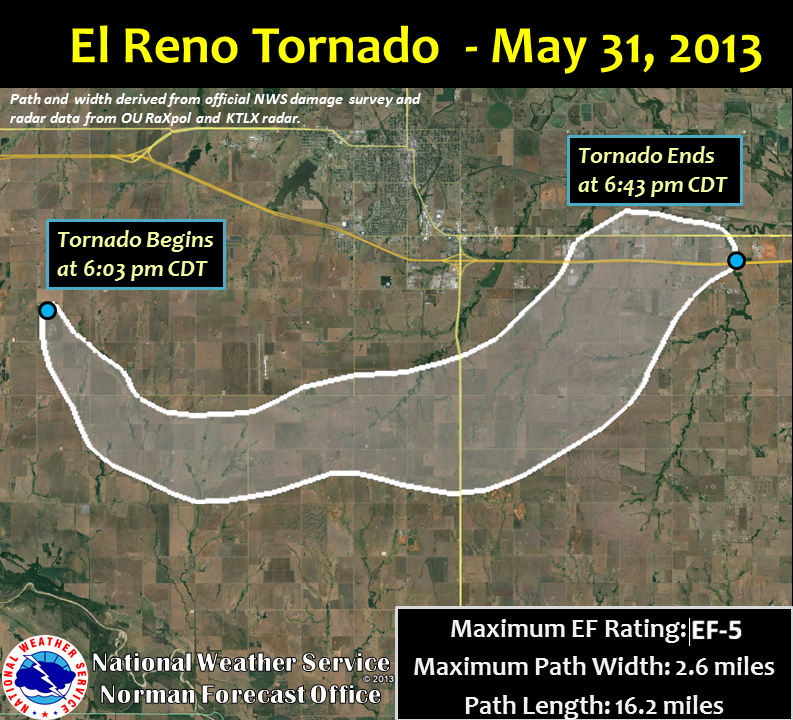
El Reno Tornado Path and Rating
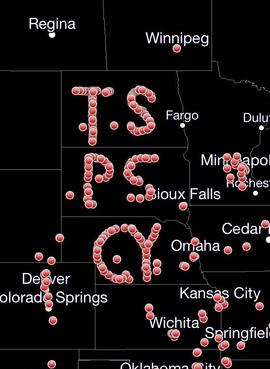
Storm Chaser Tribute June 2nd, 2013