
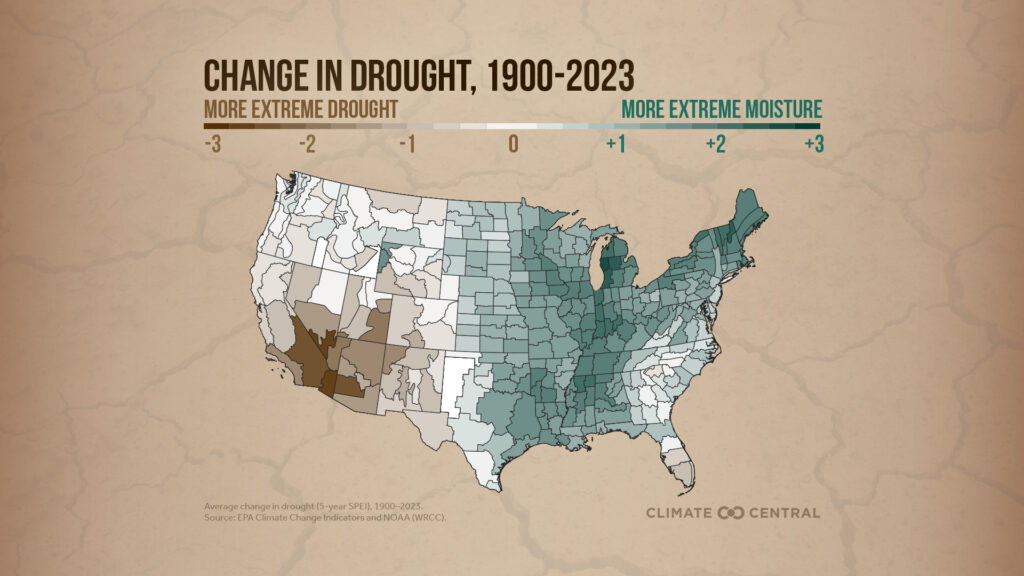
Map credit: Climate Central
Warmer, Thirstier Air Worsens Drought. Climate scientists have warned that dries will get drier and wets will get wetter, and that is what we are seeing as theory becomes reality. Here’s an excerpt from a Climate Central post: “The relentless rise in heat-trapping pollution is warming the planet and changing the dynamics of drought — and its effects on water security, food supplies, wildfire, and ecosystems. Since the early 20th century, the western U.S. has become drier and the eastern U.S. has become wetter. As temperatures rise, the atmosphere gets thirstier and pulls more water from streams, soils, and plants — causing or worsening drought and fueling wildfire risk. Emerging research shows that, in our warming climate, the atmosphere’s growing demand for water is an increasingly important cause of drought in the western U.S. and around the globe…”
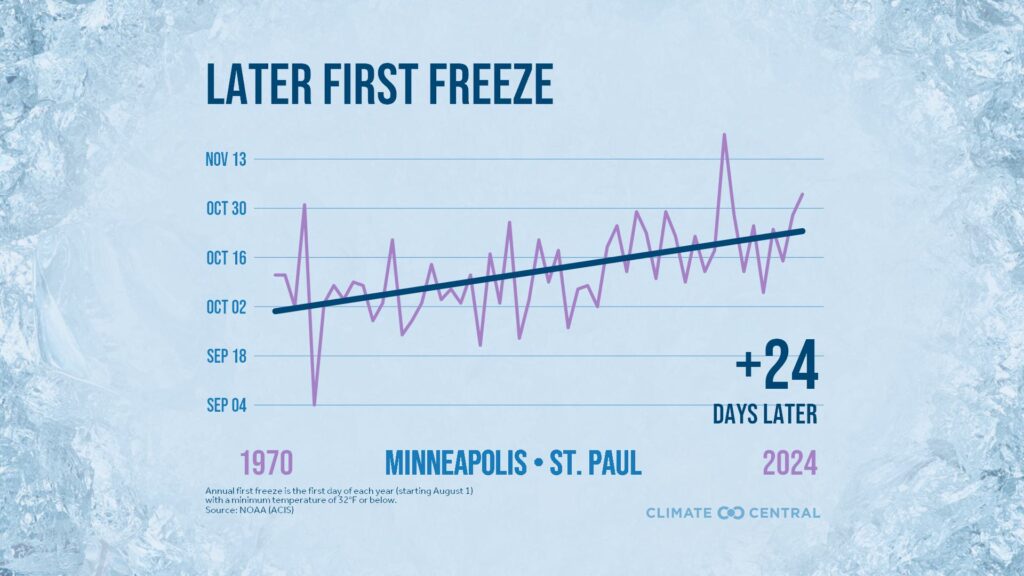
Graphic credit: Climate Central
First Freeze of Fall Coming Later for Most US Cities. Here’s an excerpt from Climate Central: “Fall warming can delay the first freeze of the season, disrupting important ecological cues in forests, farms, and gardens. Climate Central analyzed how the first fall freeze date has changed since 1970 in 204 U.S. cities. The first freeze now arrives later in 88% (179) of cities analyzed — 12 days later, on average, than in the early 1970s. A later freeze can worsen fall allergies, lengthen pest seasons, and reduce summer fruit yields...”
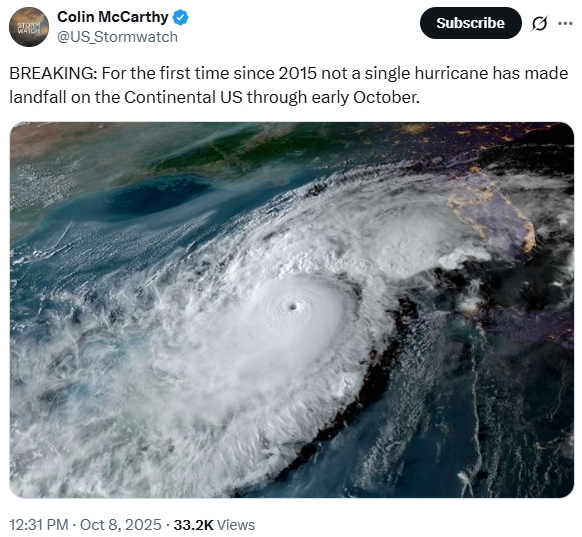
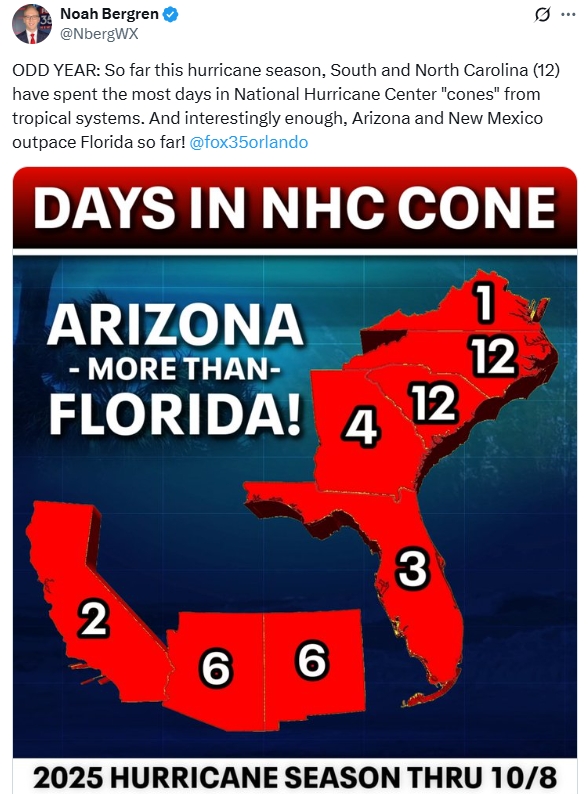
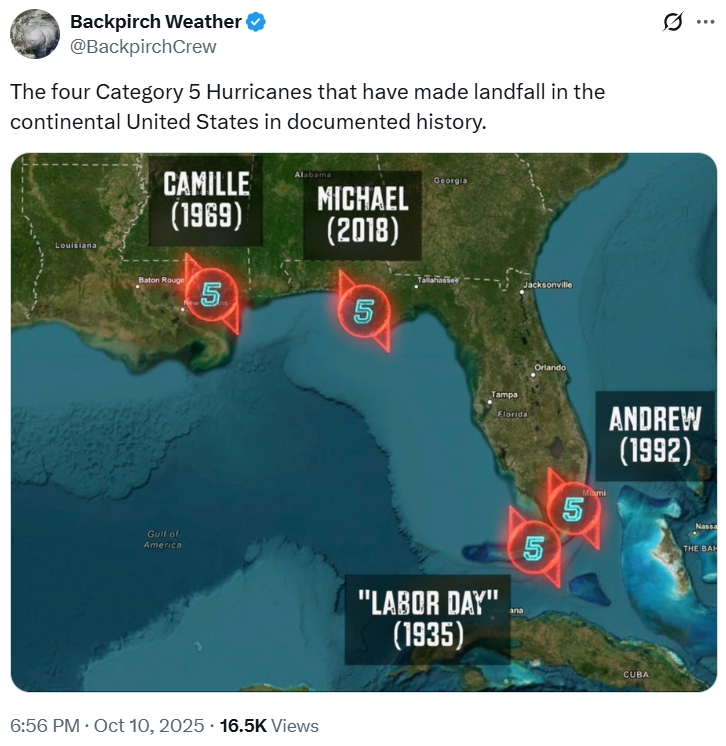
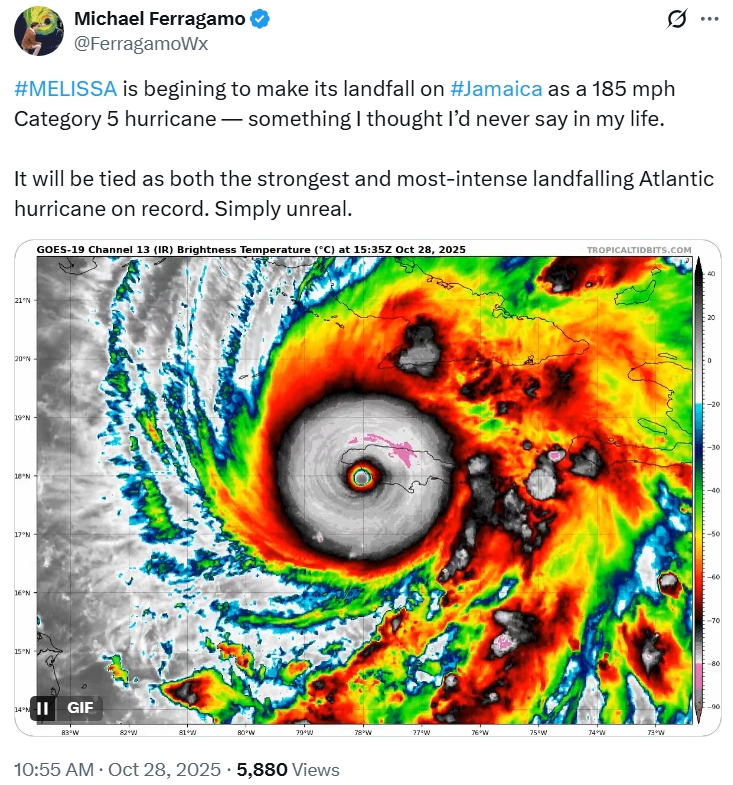
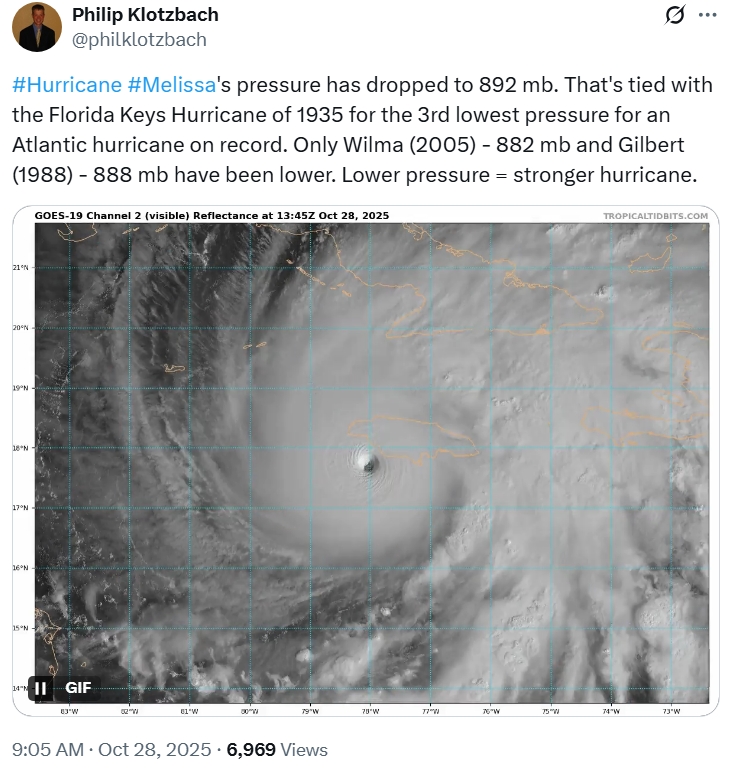
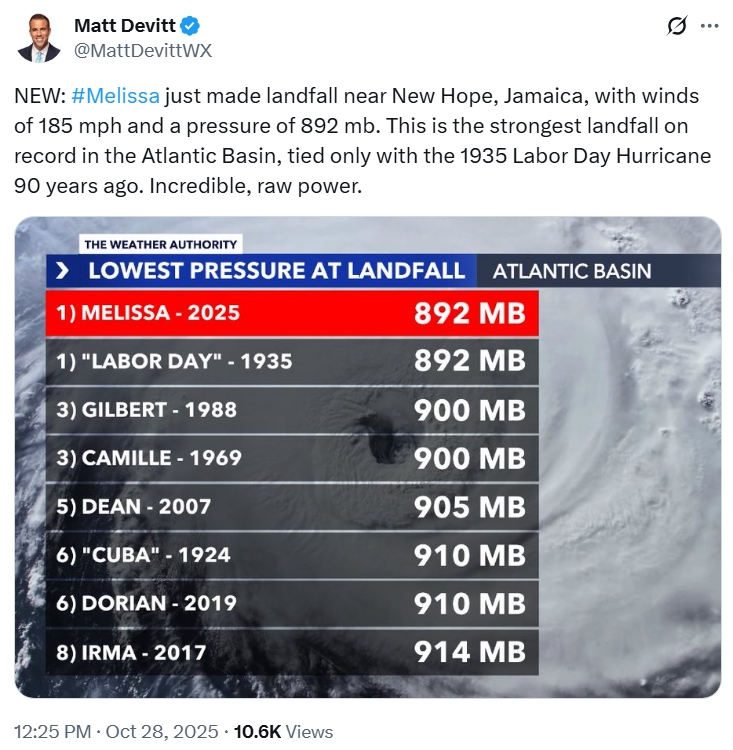
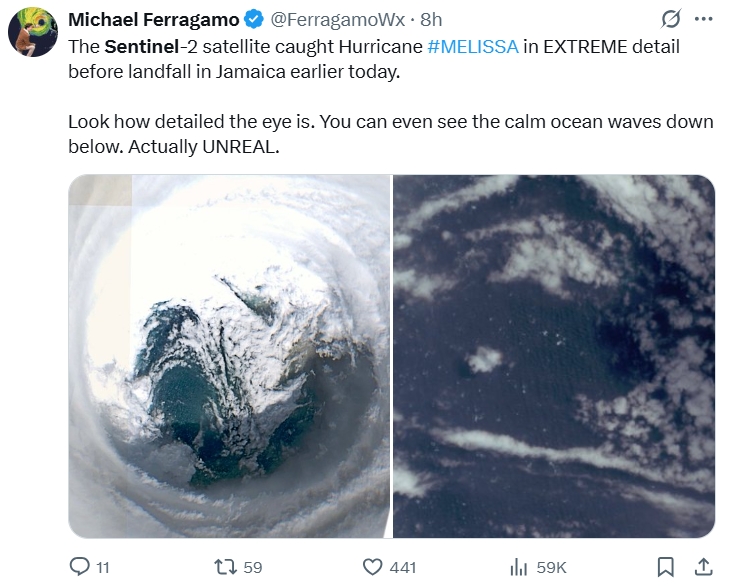
Rapid intensification of hurricanes before landfall is increasing as oceans continue to warm (92% of additional warming, mostly from the burning of fossil fuels) is going into the world’s oceans:
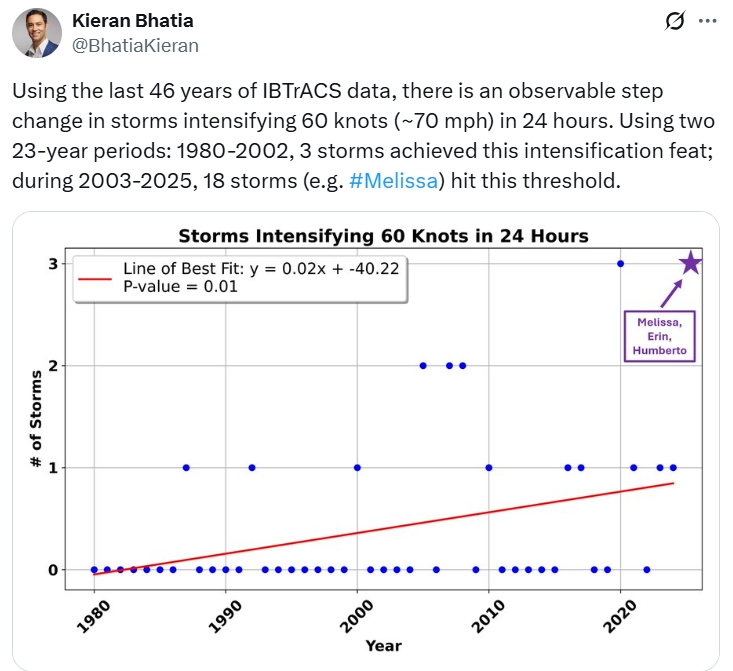
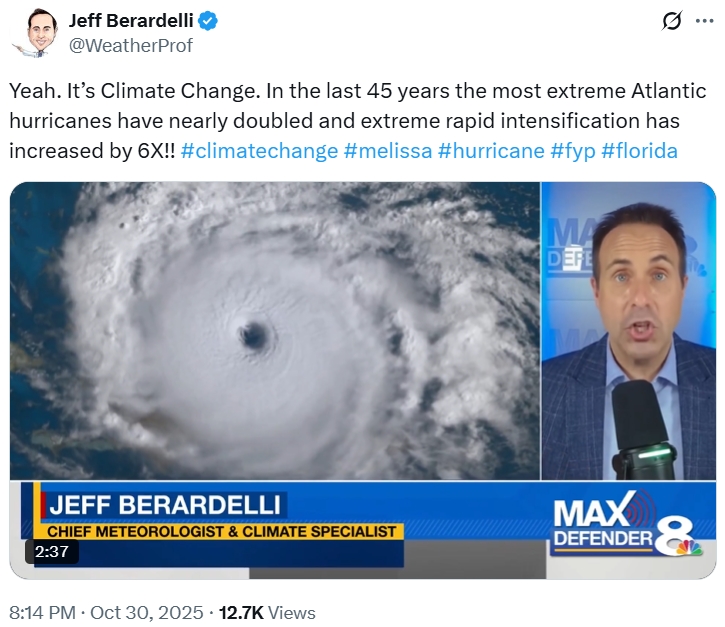
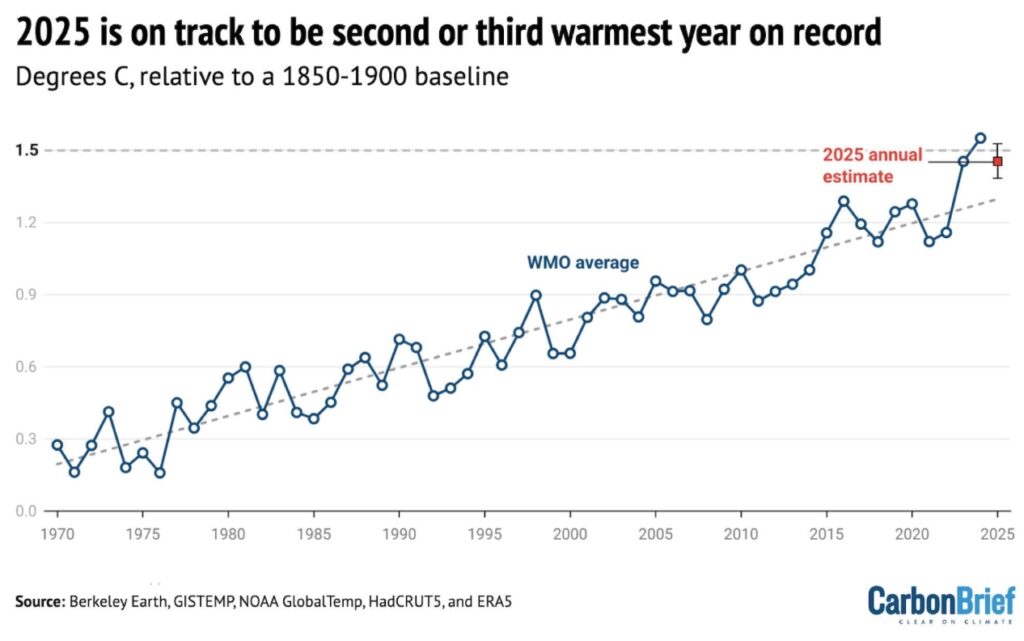
Credit: Carbon Brief
14 U.S. States Most Likely to Survive a Global Climate Crisis. In general, northern tier US states closer to the Canadian border will be in better shape overall than the southern and western US, according to climate scientists. Vermont came in as #1 and Minnesota ranked #3, according to a post at bolde.com: “…Minnesota’s reputation for cold winters might seem like a drawback, but that chill can be an asset when it comes to climate resilience. The state’s abundant freshwater resources, thanks to its thousands of lakes, provide a crucial buffer against water shortages. According to a study by the University of Minnesota’s Institute on the Environment, the state is less susceptible to droughts and has a robust agricultural sector that can adapt to changing conditions. If you value access to fresh water and fertile land, Minnesota is a smart choice…”
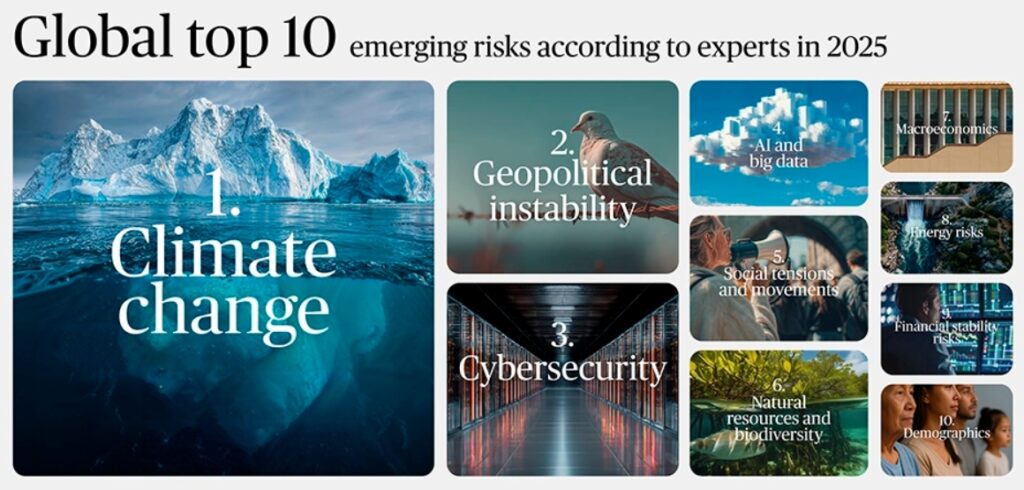
Credit: Ipsos.com
Global Top 10 Emerging Risks Report. Ipsos.com has a summary of what people around the world are most concerned about and climate change is still very much top of mind. Here’s an excerpt: “…When assessing public authorities’ readiness for various future risks, experts harshly criticise the situation, particularly regarding strategic risks: for instance, only 12% of experts believe public authorities are ready for climate change (-2% from 2024, 9% in France) or geopolitical instability (16%, -6%, 22% in France). The general public is a bit more forgiving, but among 25 tested risks, only three have a majority of the public considering national authorities as prepared. A minority of respondents see adequate readiness for climate change (32%), social tensions and movements (33%), geopolitical tensions (33%), or AI-related risks (33%)…”