
Dangerous Start to the 2026 Fire Season
This year’s wildfire season isn’t just bad, it’s becoming historic. Across the western United States, there have been more than 45,800 wildfires, especially in Washington and Oregon. Many people have been forced to leave their homes, thousands have lost power, and hundreds of buildings have been destroyed. destroyed communities, forced thousands from their homes, and sent smoke thousands of miles across North America.
As we enter August, the United States has already surpassed its 10-year average for both wildfire activity and acres burned, and fire season is far from over. So far in 2026, wildfires have burned nearly 5.3 million acres. That’s more fires and more land burned than the average wildfire season at this point in the year. Washington is battling 17 large wildfires, while Oregon has 32, more than any other state. Oregon has already burned nearly 2 million acres, making 2026 the worst wildfire year on record for the state, even though the fire season isn’t over yet. Peak fire season across much of the West typically occurs from August into September.
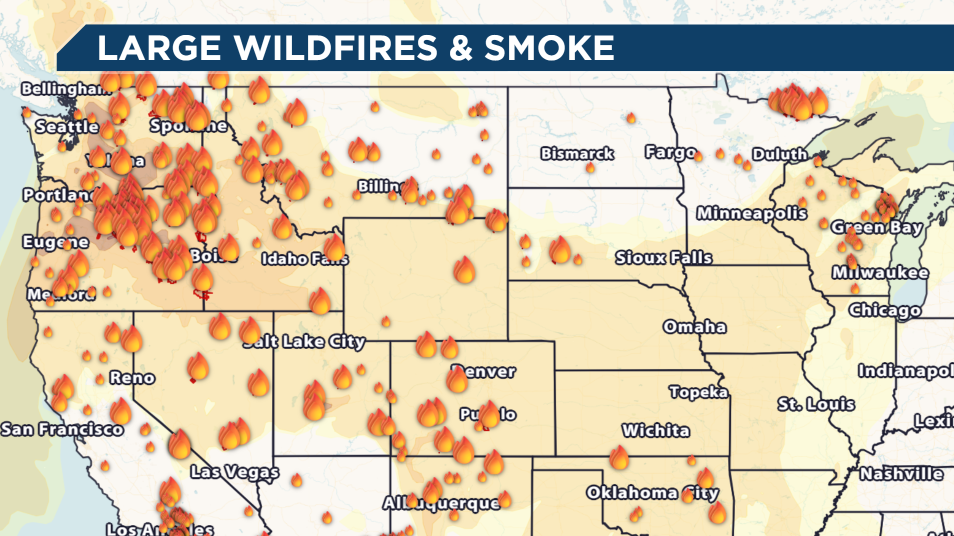
Large Wildfires and Smoke
A Fire Season Ahead of Schedule
A warm, dry winter, very little snow, extreme heat, strong winds, and drought have all helped create perfect conditions for fires to spread quickly. Scientists also say that climate change is making wildfires bigger, more common, and harder to control by creating hotter, drier weather and longer fire seasons.
The figure below shows the last 5 wildfire seasons on record and how it compares to 2026, so far. Note that in 2020, a total of 10.1 million acres burned during the entire year, but we’ve already surpassed that so far this year through August 4th.
See more data from the National Interagency Fire Center:
Total Fires and Acres (1983-2025)
National Fire News & Year-to-Date Statistics
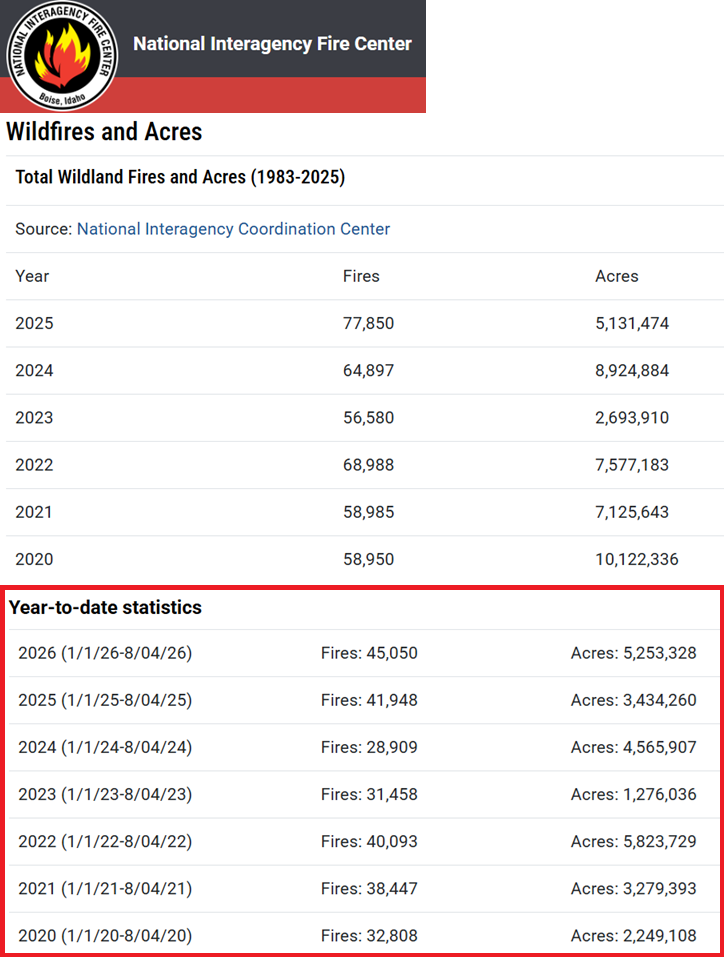
Fires and Acres Burned By Year National Interagency Fire Center
Oregon Has Already Set a Record
Oregon has already set a new record for the most acres burned by wildfires, and it’s only the beginning of August. More than 2 million acres have burned across the state, breaking the previous record set in 2024. With about two months left in the wildfire season, that number will likely keep growing.
So, why are the fires so bad this year? A warm winter with very little snow, months of dry weather, and hot, windy conditions have left forests extremely dry. These dry trees, grass, and brush act like fuel, allowing fires to spread quickly. Another reason is that forests have built up a lot of dead trees, fallen branches, and brush over many years. This gives wildfires even more to burn.
People also play a big role. About 70% of Oregon’s wildfires are caused by people, such as unattended campfires, burning debris, equipment that creates sparks, discarded cigarettes, and fireworks. Lightning is the leading natural cause of wildfires and has sparked many of this year’s newest fires.
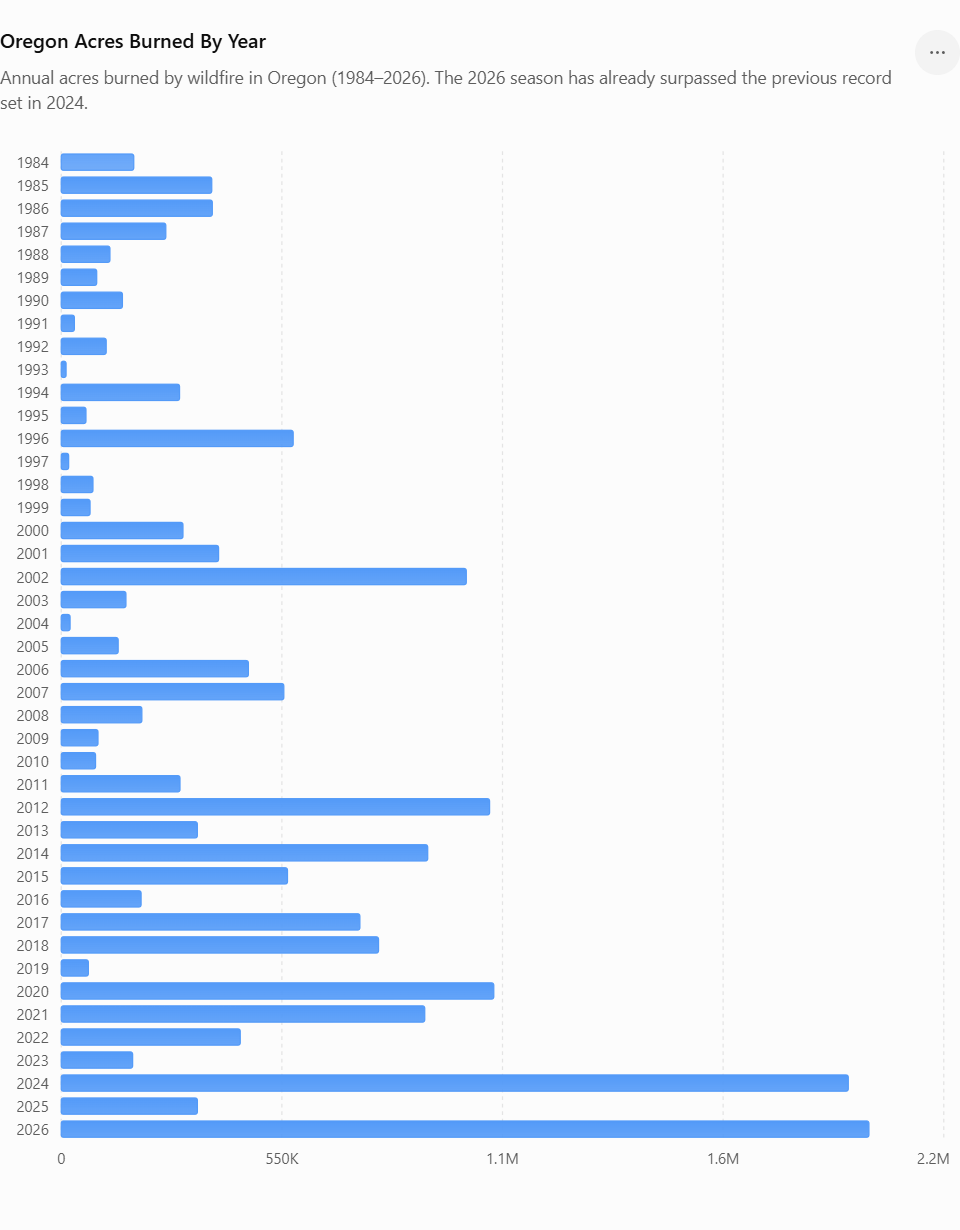
Oregon Acres Burned By Year
The wildfire season usually lasts through September and often into October, so firefighters expect more acres to burn before the season ends.
The Weather Set the Stage Months Ago
Wildfires don’t simply begin because temperatures become hot. Large wildfire seasons are often months in the making. The ingredients came together throughout the past year.
- A Warm & Lack Luster Snowy Winter – Much of the West experienced below-average mountain snow pack. That meant less water slowly melting into forests during spring. Instead, vegetation dried out much earlier.
- Continued Dry Spells Through The Spring – Many locations experienced one of their driest starts to a year on record. Moisture deficits continued building throughout spring, stressing vegetation and lowering fuel moisture
-
Mainly Dry & Hot Summer, So Far – Persistent heat waves accelerated evaporation while reducing soil moisture. That meant fine fuels, including grasses, brush, and small trees, became increasingly flammable.
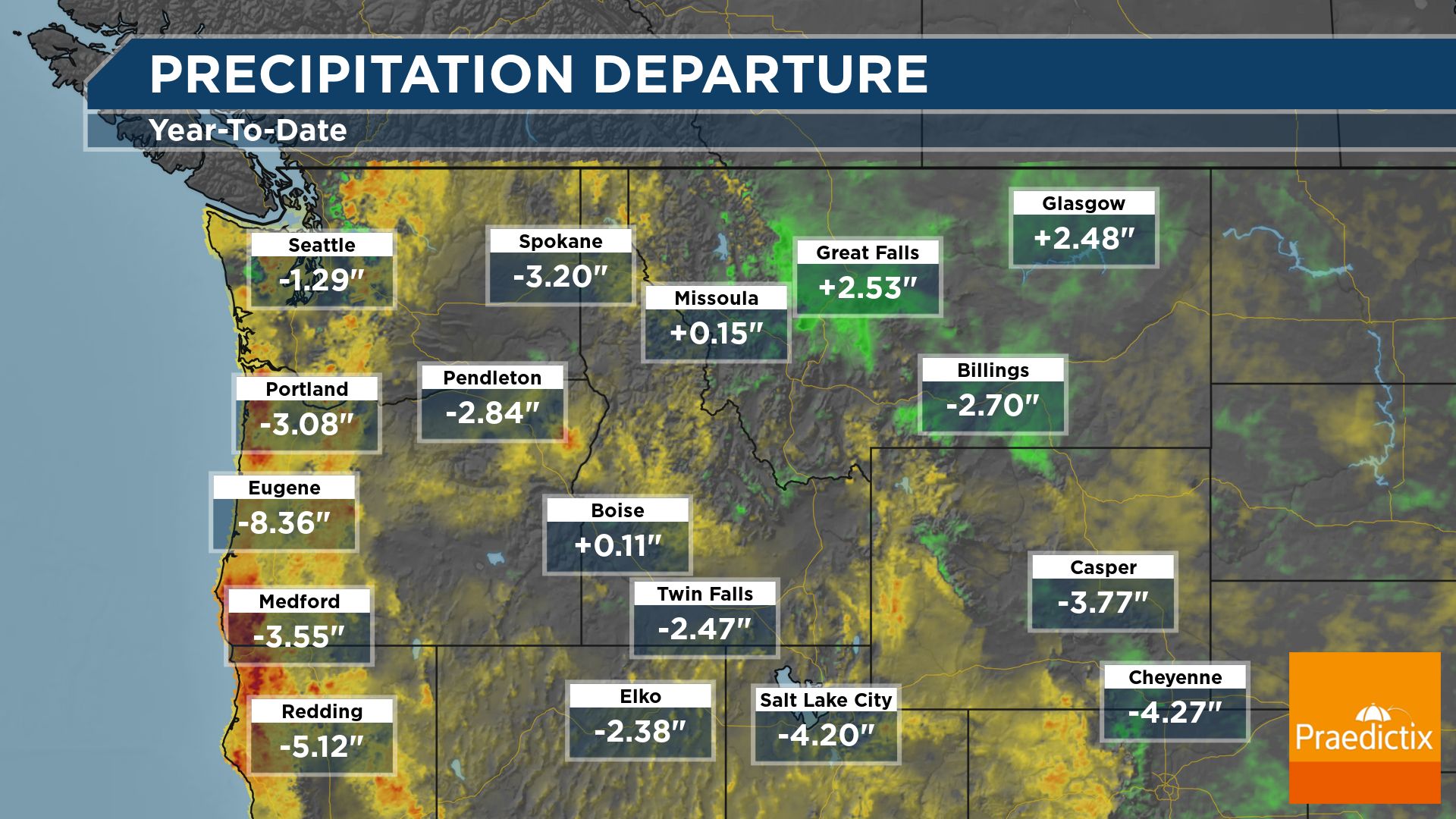
Year-to-Date Precipitation Departure From Average
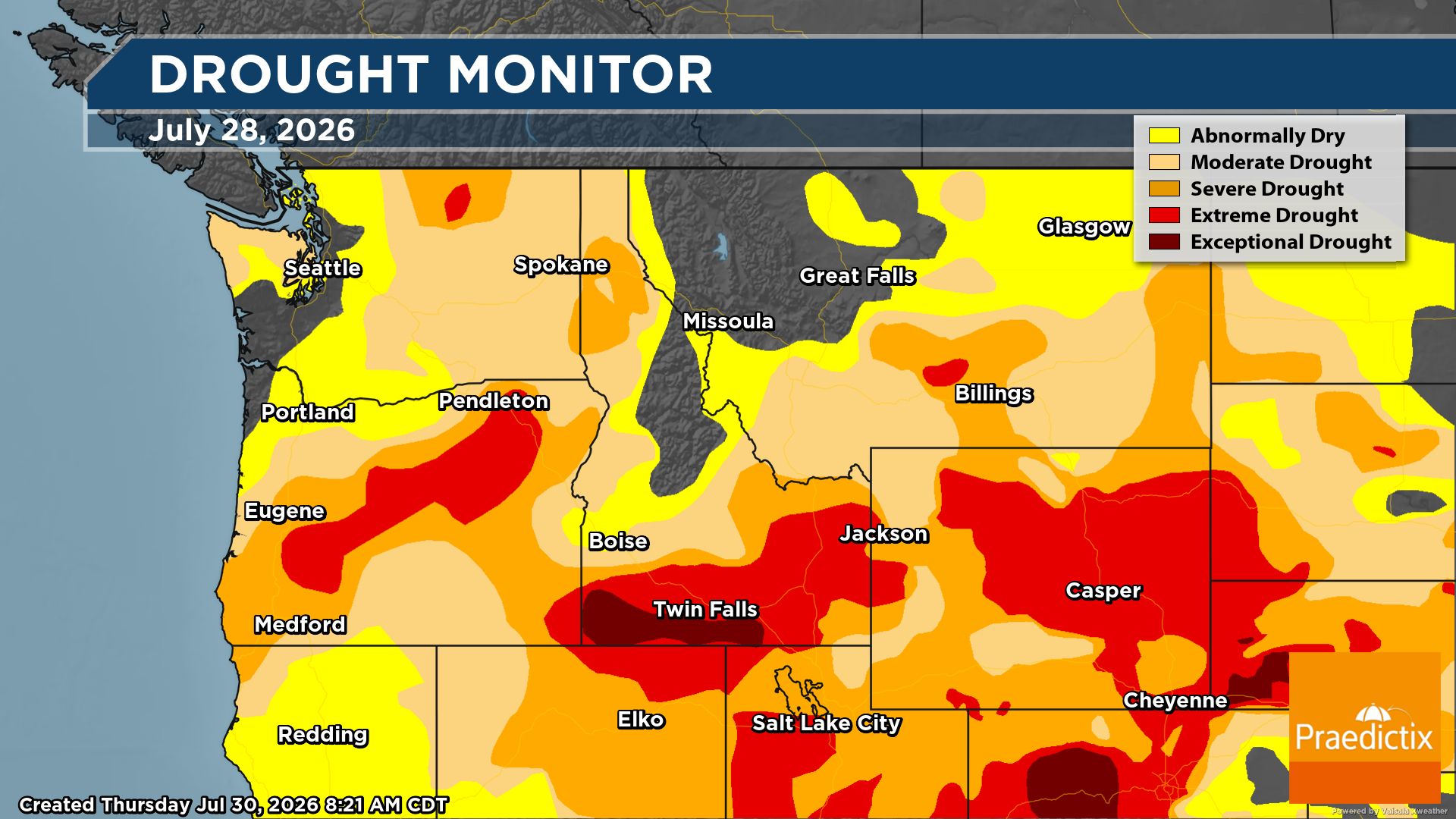
US Drought Monitor July 28th 2026
Then Came the Lightning
During mid-July, multiple rounds of dry thunderstorms swept across parts of Oregon, Washington, Idaho, and Montana. Thousands of cloud-to-ground lightning strikes ignited dozens of new fires in forests that were already critically dry. Community reports and regional fire officials described widespread lightning ignitions across central Oregon following these outbreaks.
Unlike human-caused fires that often begin near roads, lightning fires frequently ignite in remote terrain where they can grow for days before being detected. Once hot, windy weather returned, many of these small starts rapidly expanded into major incidents.
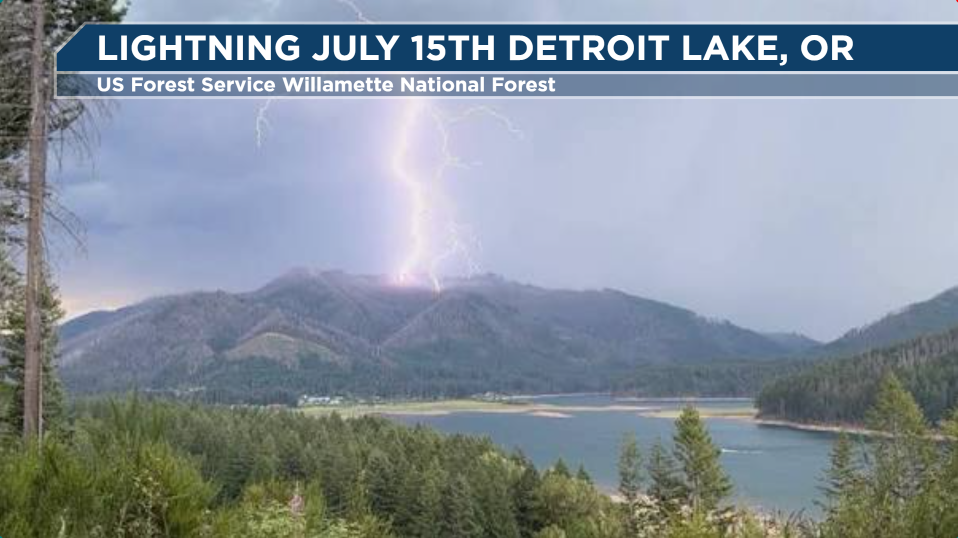
Lightning July 15th Detroit Lake Oregon US Forest Service Willamette National Forest
Why Fires Are Becoming More Extreme Over Time
Research shows wildfire behavior is changing. Extreme wildfires have roughly doubled in both frequency and magnitude since the early 2000s, driven by a combination of warmer temperatures, drier fuels, longer fire seasons, and more frequent extreme fire weather. Across the western United States, the fire season has started earlier and has been lasting longer. Wildfire fuels have been remained dry for a longer period of time and large fires are becoming more common. In some cases, the fire weather season has increased by nearly a month or 2 across parts of the Western US. and especially in the Southwest. The result isn’t necessarily more ignitions every year. It’s that today’s fires are often larger, burn hotter, and spread faster once they begin. According to Climate Central:
-
Wildfire seasons are lengthening and intensifying, particularly in the West. Many parts of the East have seen smaller but impactful increases in fire weather days.
-
Much of the West and East are experiencing the greatest increase in fire weather during spring months. The Southwest is also seeing a boost in fire weather during summer.
-
Hotter temperatures have a direct influence on fire behavior, heating the fuels and making them more likely to ignite. Warmer nighttime temperatures decrease the overnight relative humidity that once helped firefighters gain control over wildfires.
-
When relative humidity levels are very low, the air pulls moisture from the land, leaving vegetation dry and prone to burning. Climate Central’s analysis (see Observable) shows that decreasing relative humidity has been a major factor in boosting annual fire weather days for many locations across the U.S.
-
Wind supplies oxygen to a fire, causing it to burn more rapidly. Wind increases evaporation, drying out the land. Wind also carries embers, which helps fires spread.
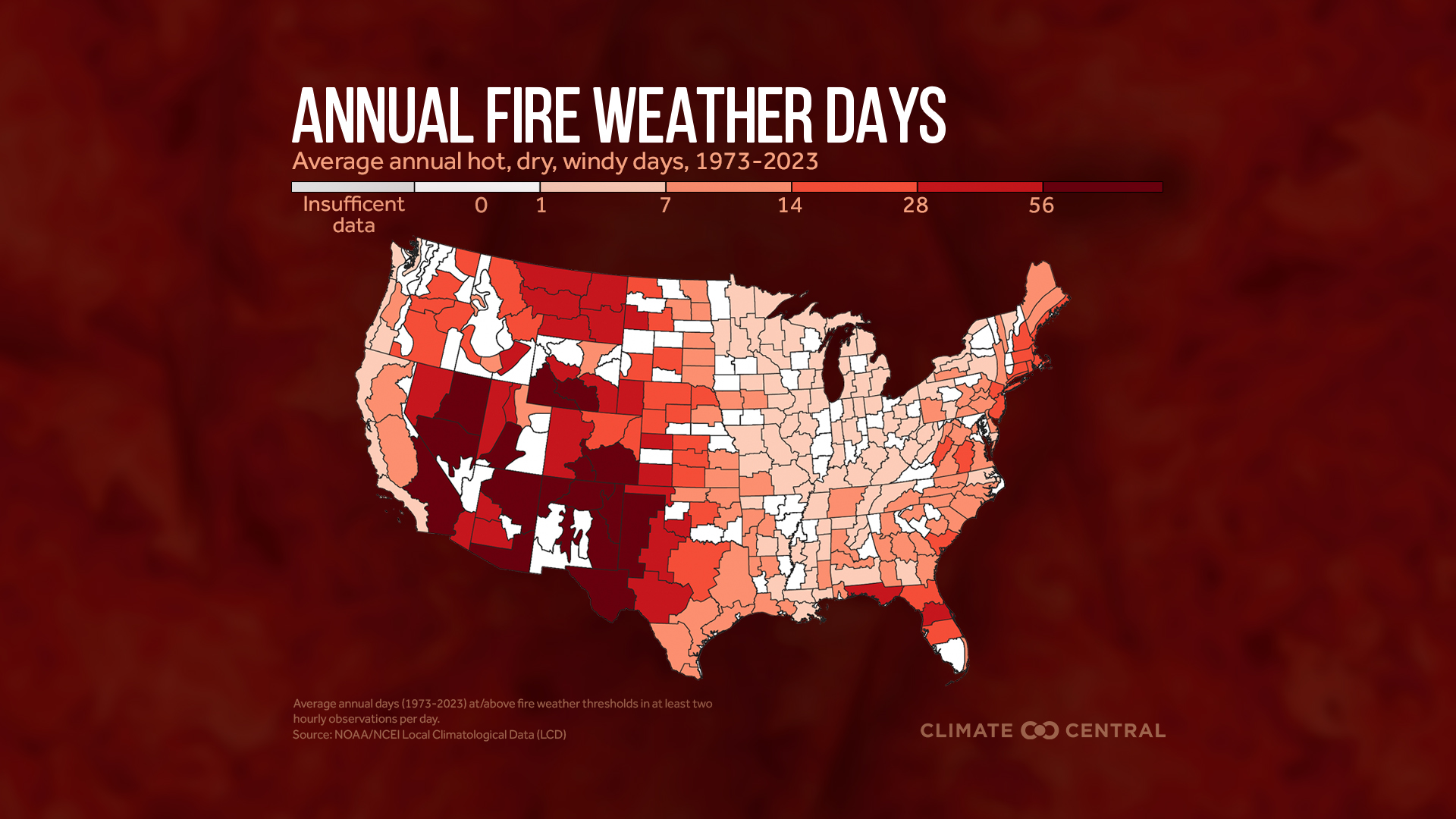
Average Annual Fire Weather Days
Smoke Travels Far Beyond the Flames
Wildfire impacts extend well beyond the burn area. This summer, smoke from western fires has repeatedly spread into the northern Plains, Great Lakes, Midwest, and even the East Coast. Reduced visibility, unhealthy air quality, transportation disruptions, and outdoor work restrictions have become common hundreds, and sometimes thousands, of miles from the fires themselves. For many businesses, smoke can become the greatest operational challenge, even when flames remain hundreds of miles away.
Wildfire Smoke Is Becoming a Bigger Problem
According to Climate Central – Wildfire smoke is affecting more people than ever before. Between 2020 and 2024, Americans were exposed to four times more harmful wildfire smoke than they were from 2006 to 2019. Smoke doesn’t stay near the fire. It can travel hundreds or even thousands of miles, lowering air quality in places far away. That’s why people in states like Minnesota can experience smoky skies even when the fires are burning in the western U.S. or Canada.
Scientists say climate change is making wildfire smoke worse by creating hotter, drier weather that helps fires grow larger and burn longer. Wildfire smoke contains tiny particles called PM2.5 that are small enough to travel deep into your lungs and even into your bloodstream. These particles can make it harder to breathe and increase the risk of heart and lung problems, especially for children, older adults, pregnant women, and people with asthma or other health conditions. Recent studies estimate that wildfire smoke contributed to nearly 164,000 premature deaths in the United States between 2006 and 2020, with about 15,000 of those deaths linked to climate change.
As wildfire seasons become longer and more intense, smoke is becoming a nationwide air quality problem, not just an issue for the western United States.
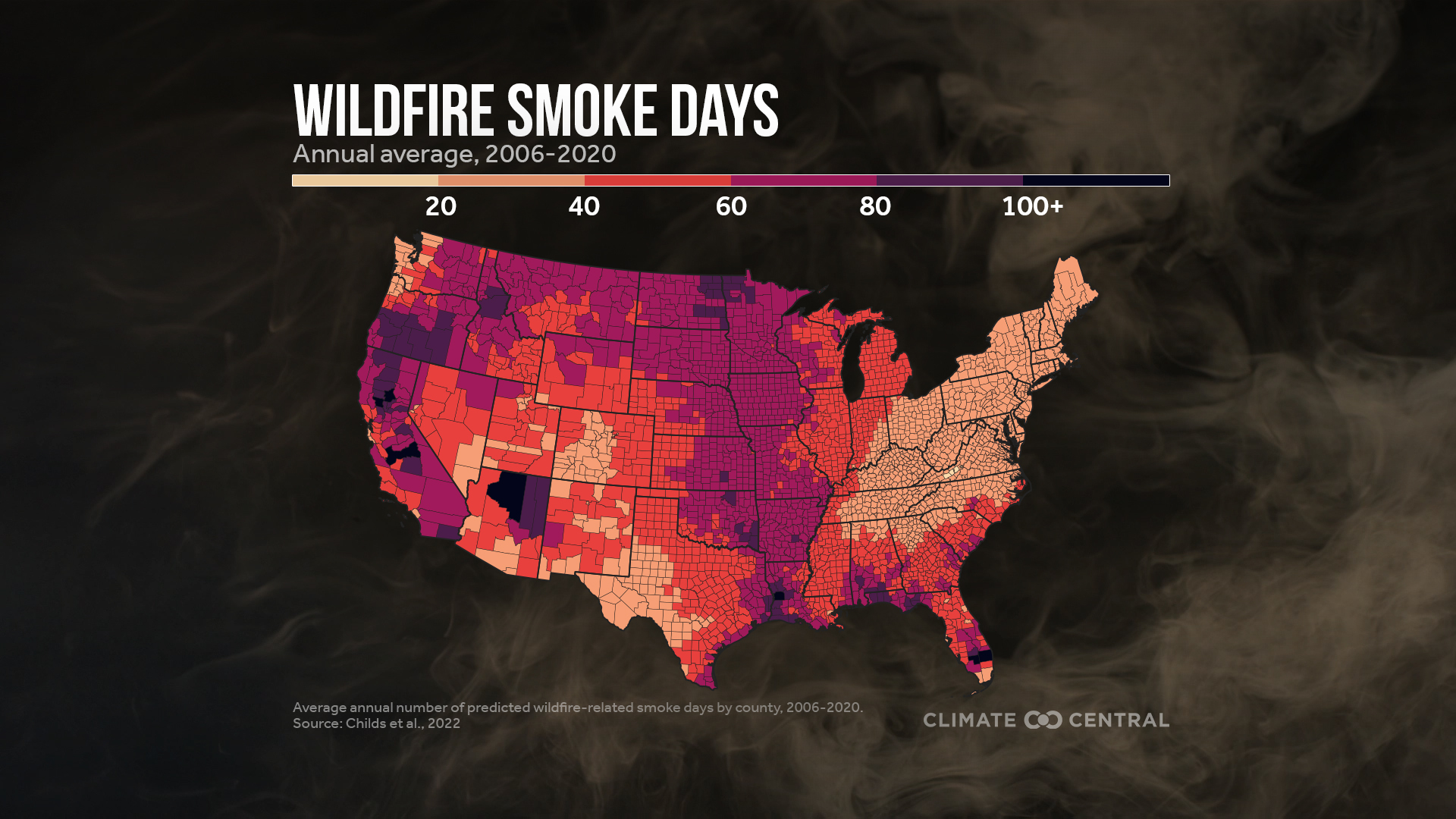
Wildfire Smoke Days
Why This Matters for Businesses
For companies with employees working outdoors or operations spread across multiple states, wildfire weather has become a year-round business risk. Wildfires don’t just burn forests, they also make it harder for businesses to operate.
Poor air quality can force construction crews, farmers, and delivery drivers to stop working because the smoke is unhealthy. Employees may also get sick or stay home to care for family members, leading to fewer workers on the job. Smoke keeps many people indoors, so stores, restaurants, and outdoor events often see fewer customers.
Wildfires can also cause power outages, close roads, and delay deliveries, making it harder for businesses to get the supplies they need. At the same time, companies may have to spend extra money on air filters, air purifiers, and protective equipment to keep workers safe.
All of these challenges can lead to lost productivity, higher costs, and lower sales.
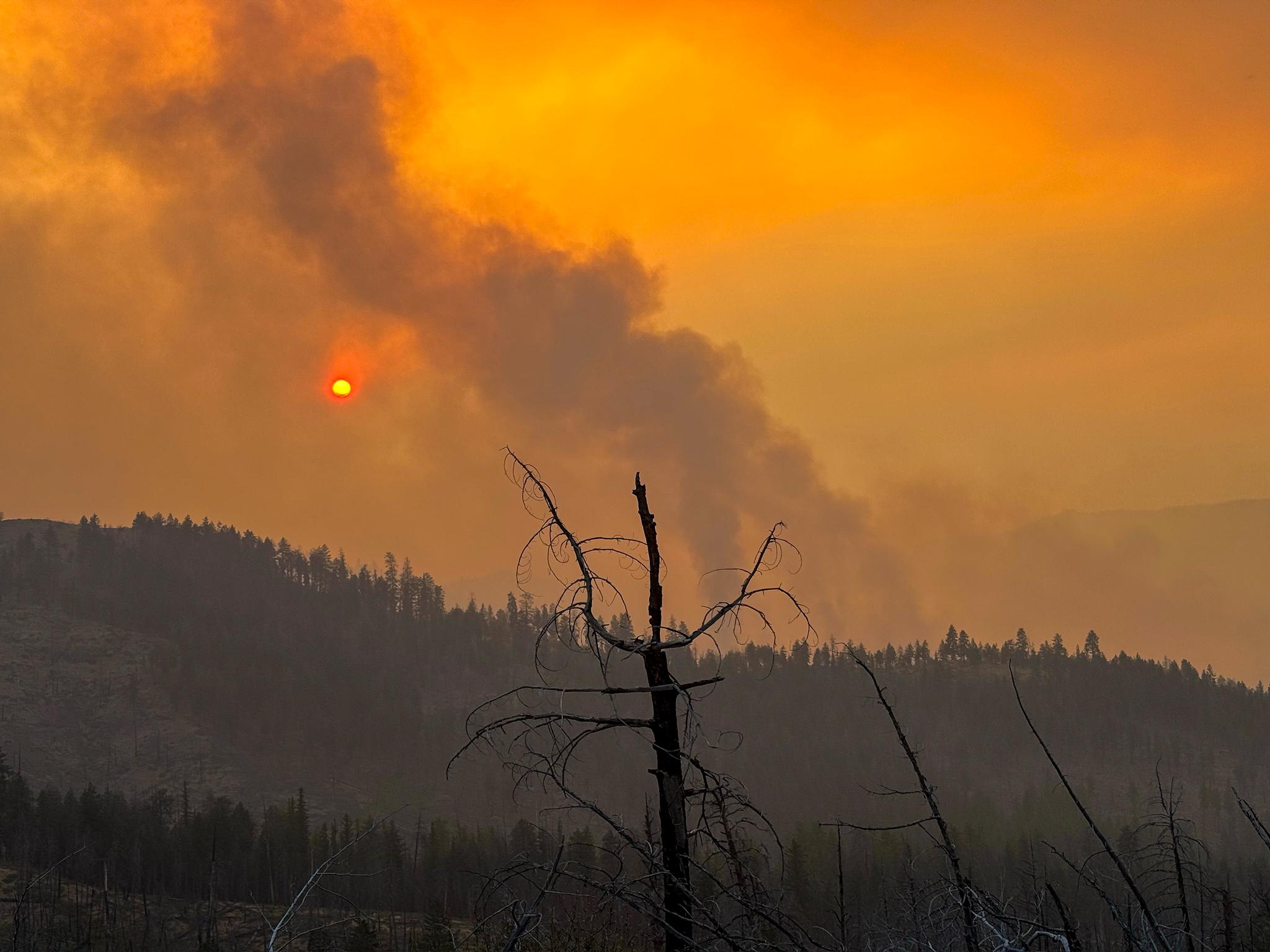
July 24 Fire Activity Rowe Creek Complex By OSFM Brett Deedon
Looking Ahead
Unfortunately, we’re not finished. Historically, August and September are among the most active wildfire months across much of the western United States. With significant drought, abundant dry fuels, and additional periods of hot, windy weather still possible, the wildfire threat is likely to remain elevated well into fall. Some fire officials are suggesting that we could have fires burning well into October.
The 2026 season is another reminder that catastrophic wildfire seasons don’t develop overnight. They’re built over months through the combined effects of weather, climate, vegetation, and ignition sources. Understanding those connections is where meteorology becomes one of the most valuable tools in managing wildfire risk.
Todd Nelson
Senior Meteorologist, Praedictix
See how Praedictix can help your business