
The Cost of Weather Delays and How to Reduce Them
Weather is one of the few business risks that no company can control; however, every company can prepare for it. Whether it’s a construction project delayed by thunderstorms, an airport battling heavy snow, a utility responding to hurricane-force winds, or a logistics company navigating icy roads, severe weather can disrupt operations within minutes. As a result, organizations may face costly delays, increased safety risks, and unexpected operational challenges. Fortunately, with proactive planning and accurate weather intelligence, many of these impacts can be reduced, or even avoided altogether. Those disruptions can quickly translate into lost productivity, increased labor costs, damaged equipment, missed deadlines, and safety concerns.
The good news? Many weather-related delays are preventable, or at least manageable, with the right weather intelligence and decision support.
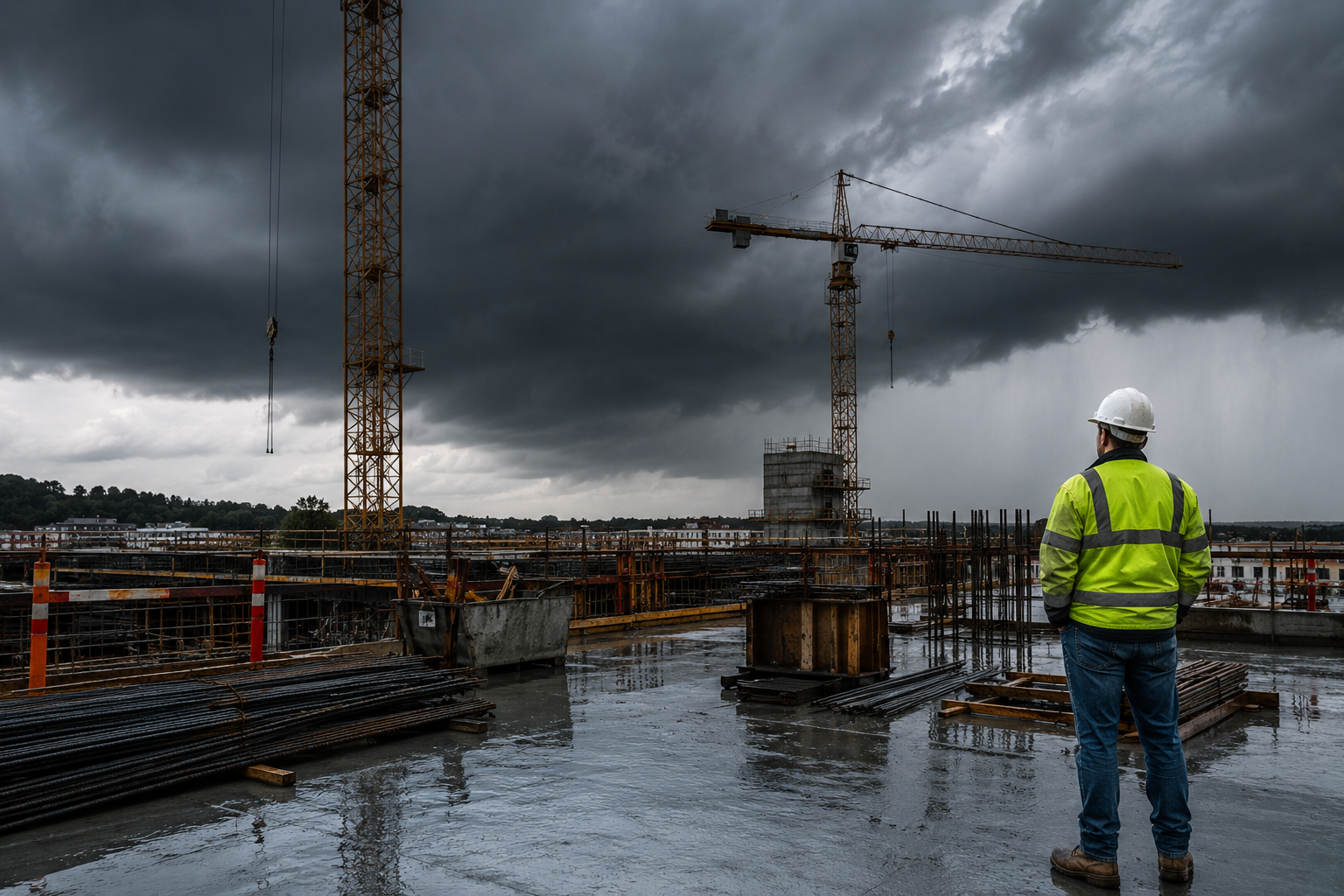
Construction Site
The Hidden Cost of Weather Delays
Weather impacts nearly every industry. While many people think of canceled flights or snow-covered roads, the financial effects extend much further. Some of the most common weather-related costs include:
- Project delays and missed contractual deadlines
- Overtime labor expenses
- Equipment downtime
- Supply chain disruptions
- Transportation delays
- Property damage
- Lost production
- Employee safety concerns
- Business interruption
- Insurance claims and litigation
According to Climate Central, there were 23 separate billion-dollar weather and climate related disasters in 2025. From 1980 to March of 2026, there have been 431 total billion-dollar weather and climate related disasters, totaling $3.1 trillion dollars, and leading to more than 17,000 deaths. For individual companies, even a single day of unexpected downtime can cost tens of thousands, or even millions, of dollars depending on the operation.
The challenge isn’t simply knowing that bad weather is coming. It’s understanding how the weather will affect your specific operation, when conditions will deteriorate, how long they’ll last, and when it’s safe to resume work.
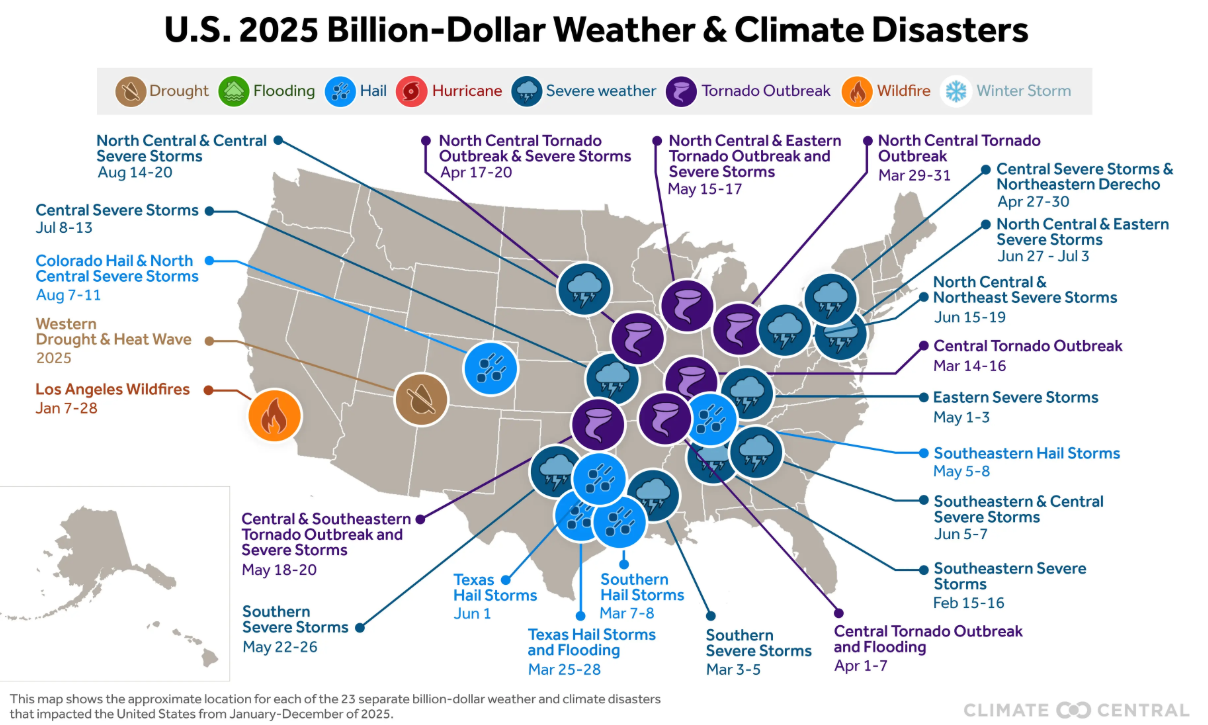
2025 Billion-Dollar Weather and Climate Related Disasters
Every Industry Faces Different Weather Risks
Every business experiences weather differently. A public weather forecast may tell you rain is expected, but operational decisions require much more detail.
- Construction – A thunderstorm arriving two hours earlier than expected can leave crews exposed, delay concrete pours, or halt crane operations because of increasing winds. Accurate timing allows project managers to safely schedule work, protect equipment, and minimize downtime.
- Renewable Energy – Wind farms and solar facilities depend on weather every day. Forecast accuracy helps operators anticipate changes in power production, protect field crews, and plan maintenance during favorable weather windows.
- Aviation – At airports, weather decisions happen minute by minute. Snowfall rates, visibility, runway conditions, crosswinds, freezing precipitation, and changing wind directions all influence airport operations. A difference of just 30 minutes in snowfall timing can significantly impact snow removal efforts, aircraft deicing, and flight operations.
- Transportation & Logistics – Heavy snow, flooding, fog, high winds, and severe thunderstorms can all disrupt delivery schedules and increase safety risks. Better weather intelligence allows dispatchers to reroute equipment, adjust schedules, and reduce unnecessary delays.
- Commercial Facilities – Property managers face year-round weather challenges, from winter storms and ice accumulation to extreme heat and flooding. Preparing facilities before high-impact weather can reduce damage and improve business continuity.
Moving Beyond the Weather App
Most weather apps are designed for the general public. Businesses, however, need operational weather intelligence. That’s where decision support becomes valuable. Professional meteorologists analyze multiple forecast models, real-time observations, radar trends, satellite imagery, and local weather patterns to answer operational questions such as:
- When will weather begin impacting my location?
- How confident are we in the forecast?
- What weather hazards pose the greatest operational risk?
- How intense will conditions become?
- How long will the disruption last?
- When is the safest opportunity to resume operations?
These answers help organizations make informed decisions before weather becomes a costly problem.
Turning Forecasts Into Decisions
At Praedictix, we work alongside our clients before, during, and after significant weather events. Rather than simply issuing a forecast, we translate weather information into operational guidance tailored to each customer’s needs. Over the years, we’ve supported organizations through:
- Major winter storms impacting transportation and critical infrastructure
- Severe thunderstorms producing damaging winds, large hail, and tornadoes
- Flash flooding and river flooding events
- Tropical storms and hurricanes affecting operations across the Atlantic and Pacific basins
- Wildfires, fire weather conditions, and air quality concerns
- Extreme heat events impacting outdoor workers
- Aviation snow operations and airport weather support
- Large public events requiring weather monitoring and contingency planning
Our meteorologists continuously monitor evolving weather conditions, communicate forecast confidence, and provide timely updates as situations change.
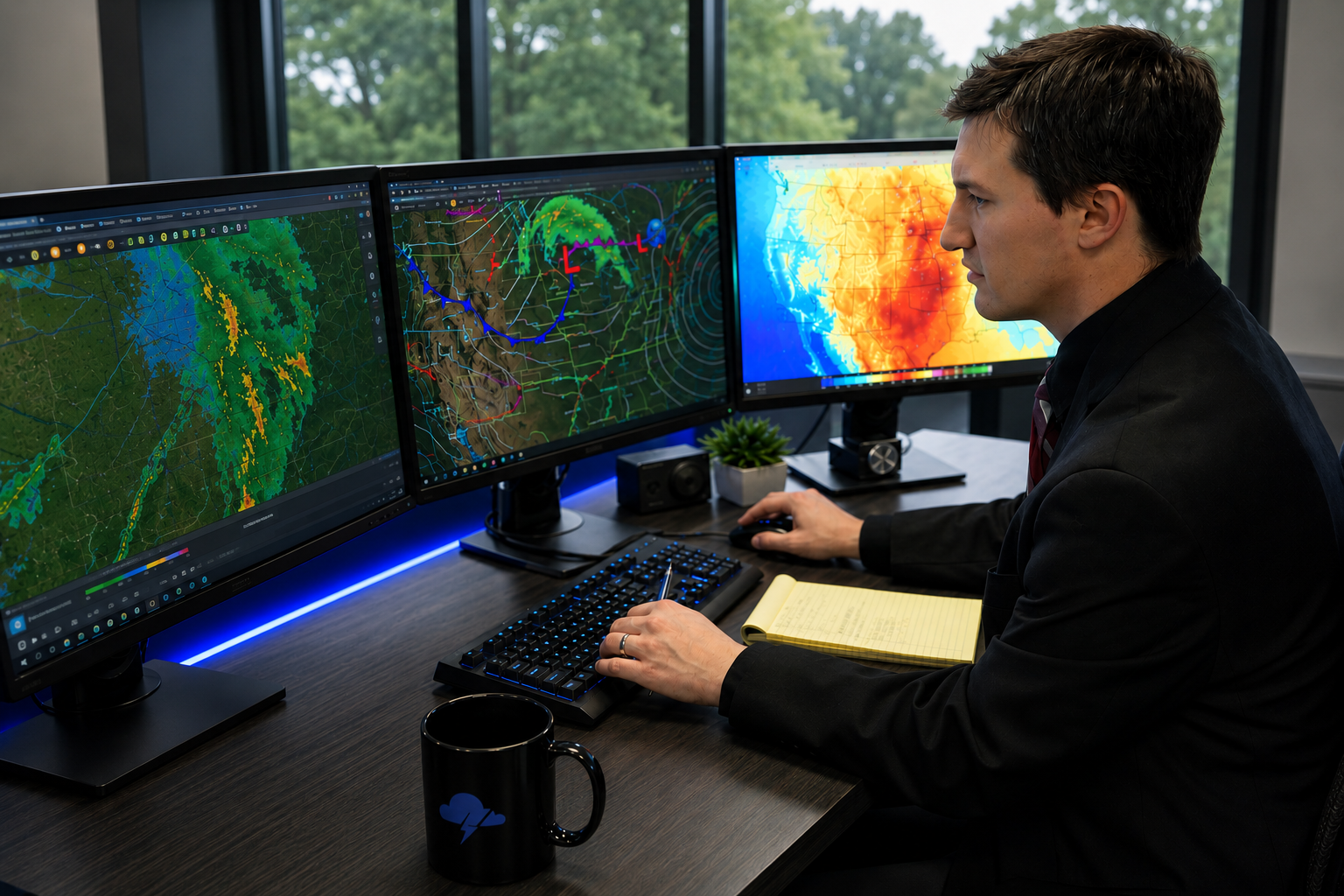
Praedictix Meteorologist – DJ Kayser
Site-Specific Weather Intelligence
Every facility is different. The weather at one project site may be completely different just 20 miles away. That’s why Praedictix provides site-specific forecasts designed around each client’s operation rather than relying on broad regional forecasts. Whether supporting a construction project, renewable energy facility, manufacturing plant, airport, or commercial property, our meteorologists focus on the weather variables that matter most to your business. Instead of asking, “Will it rain?” We answer questions like:
- When should crews leave the field?
- When will winds exceed crane operating limits?
- How long will lightning delay operations?
- When will snowfall rates overwhelm snow removal efforts?
- When will roads begin icing?
- When will conditions improve enough to safely resume work?
These operational decisions often save far more than the cost of the forecast itself.
Supporting Insurance and Force Majeure Claims
Weather doesn’t stop being important after the event ends. Praedictix also provides Forensic Weather Analysis for insurance carriers, attorneys, contractors, and businesses requiring detailed historical weather documentation. Our forensic meteorologists investigate past weather events using archived observations, radar, satellite imagery, lightning data, storm reports, and historical weather records to reconstruct what occurred at a specific location and time. These reports can assist with:
- Insurance claims
- Property damage investigations
- Construction disputes
- Contract compliance
- Business interruption claims
- Force majeure documentation
- Legal proceedings
- Expert witness testimony
When weather becomes part of a legal or contractual dispute, having accurate, defensible meteorological analysis can make a significant difference.
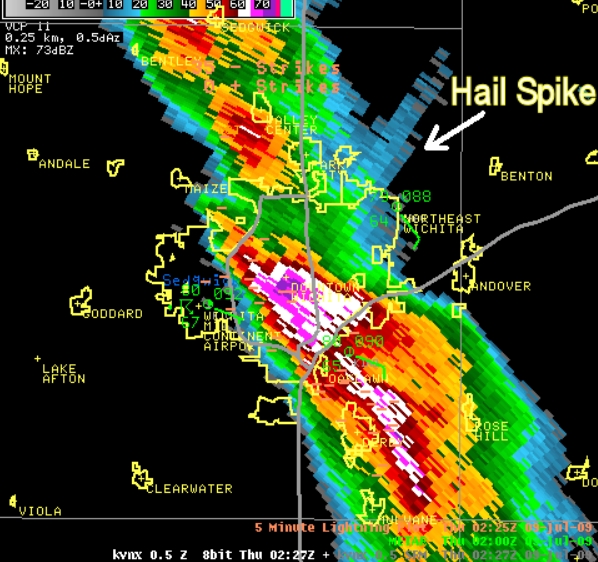
hail spike on radar
Reducing Risk Starts Before the Storm
The most successful organizations don’t simply react to weather, they prepare for it. Weather risk management isn’t about eliminating uncertainty. It’s about making better decisions with better information. Having access to experienced meteorologists who understand your operation allows your team to anticipate disruptions, improve safety, reduce downtime, and maintain business continuity when weather becomes a factor.
Whether you’re managing a construction project, overseeing airport operations, operating renewable energy assets, maintaining commercial facilities, coordinating logistics, or preparing for the next major storm, Praedictix delivers the weather intelligence needed to make confident operational decisions. Our services include:
- Operational weather forecasting
- Site-specific forecasts
- Decision support briefings
- 24/7 weather monitoring
- Automated weather alerts
- Aviation forecasting
- Severe weather support
- Winter weather operations
- Forensic weather reports
- Historical weather analysis
- Force majeure documentation
- Expert weather consultation
If your organization depends on weather, we’d love to show you how operational weather intelligence can reduce risk, improve safety, and help your team stay one step ahead of the forecast.
Ready to learn more? Contact Praedictix today to discuss how our meteorologists can support your business before, during, and after impactful weather events.